Lottery: All you need to know before you start playing

Jul 03, 2026

Jul 03, 2026
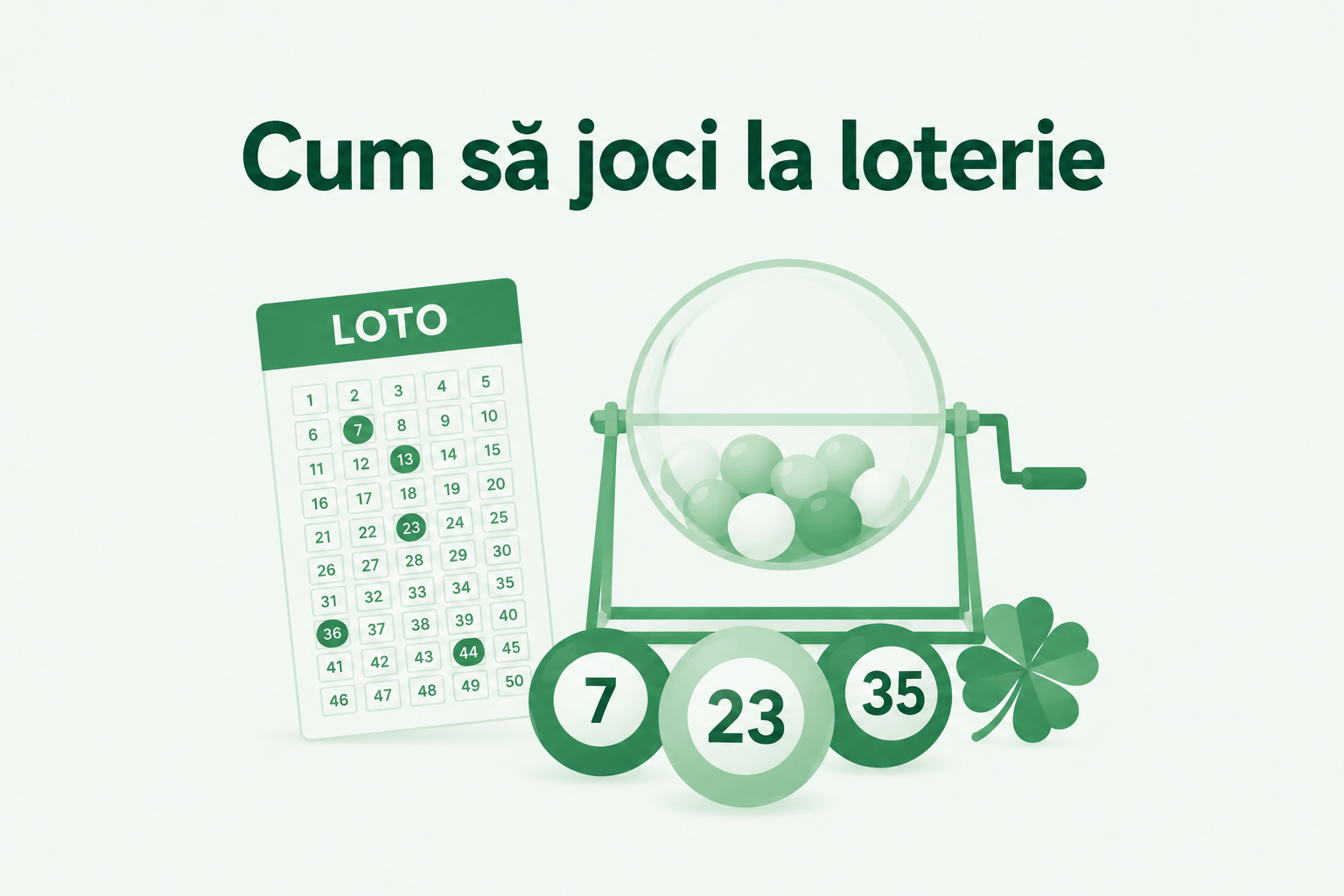
The apparent simplicity, however, hides important details: how the odds work, what types of games exist and how the prizes are calculated. This article explains them, with no unrealistic promises.
The lottery is a gambling game in which participants buy tickets with numbers, and the winners are determined by a random draw. If the numbers you chose match those drawn, you receive a prize corresponding to the winning category.
The draws use either mechanical devices with balls or certified random number generators. Whatever the method, every draw is independent of the previous ones.
The numbers that came up before have no influence at all on the next draw. This is an essential point that many players misinterpret.
Regulated lotteries operate on the basis of a state license. This guarantees that the draws are fair and that prizes are paid according to the rules.
There are several formats, each with different rules and odds:
Number lottery. You choose a set of numbers from a range (for example 6 out of 49). The top prize is won by matching all the numbers drawn.
Instant or scratch lottery. You scratch a ticket and find out on the spot whether you have won. The odds are usually printed on the ticket.
Daily lottery or Keno. Frequent draws, with the option to choose how many numbers you play from a larger range.
Progressive jackpot lotteries. The top prize rolls over to the next draw if it is not won, building up over time.
Each format attracts a different type of player. Those chasing big prizes prefer number lotteries, while those who want a quick result choose the instant variants.
The chance of winning is a fixed mathematical value, calculated on the basis of the number of possible combinations. For a 6-out-of-49 lottery, there are about 13.98 million combinations.
That means a chance of about 1 in 14 million of matching all six numbers with a single ticket. The value does not change no matter how often you play or which numbers you choose.
"Lucky" numbers, birth dates or sequences that came up often in the past change nothing. Every combination has exactly the same chance, including a seemingly improbable one such as 1-2-3-4-5-6.
The lower prize categories have much better odds. Matching three or four numbers is significantly more likely than matching all of them, although the prizes are smaller.
Prizes are organized into categories, each corresponding to a different number of matches. The jackpot goes to those who match all the numbers drawn.
The prize fund comes from a percentage of total ticket sales. The rest covers operating costs, taxes to the state and, for state lotteries, contributions to the public budget.
If several players match the winning combination in the same draw, the prize is split equally between them. An announced jackpot can therefore be divided among several winners.
In some countries, winnings above a certain threshold are subject to tax. Check the local rules to know whether and how taxes apply to large prizes.
The lottery is structured so that, in the long run, the amount paid out in prizes is smaller than the total takings. The advantage belongs to the operator, and on average players lose more than they win.
This does not make it worthless as entertainment, but it changes the framework in which it should be approached. A few practical principles:
Set a budget dedicated exclusively to the lottery, one you can afford to lose without affecting essential expenses.
Do not chase losses by buying an ever-larger number of tickets.
Treat any win as an unexpected bonus, not as income you count on.
Set a frequency of play and stick to it, avoiding impulsive participation.
A few misconceptions circulate constantly and are worth clearing up:
"Certain numbers come up more often." In the long run, they all have the same probability. Patterns from the past are the result of chance.
"The same numbers increase your chances." Every draw is independent. Playing the same numbers does not help.
"There are strategies that guarantee a win." No strategy changes the fixed probability of a lottery.
"Buying more tickets means a sure win." More tickets slightly increase the chance, but the cost rises proportionally too, and the probability remains very low.
These myths persist because people look for patterns where there is only chance. Understanding the random nature of the draws is the best protection against them.
Today, the lottery can be accessed through two main channels, each with its advantages.
The physical lottery involves buying a ticket from a point of sale. It is the traditional format, valued for the tangibility of the ticket and the direct experience. Checking results is done at the point of sale or through published lists.
The online lottery offers access through web platforms and mobile apps. The main advantages are:
Participation without traveling
Instant checking of results
Participation history saved in an account
Self-limitation tools
Whatever the channel, the principle stays the same: the odds are fixed, and the draws are random. The choice between physical and online comes down to personal preference, not to the chances of winning, which do not change depending on the channel.
The lottery is a gambling game with simple rules, but with precise mathematics behind it. The odds are fixed, the draws are independent, and the prizes come from a fund fed by ticket sales.
Understanding these elements helps you take part with realistic expectations, without illusions about lucky numbers. The lottery can be a form of entertainment if it is approached with a clear budget and without expecting a win. The game is intended exclusively for people over 18, and responsible play means treating any win as a bonus and stopping at the limit you set.
What is the chance of winning the lottery?
It depends on the format. In a 6-out-of-49 lottery, the chance of matching all the numbers with one ticket is about 1 in 14 million. The lower categories have much better odds.
Do numbers that came up often in the past have a higher chance?
No. Every draw is independent, and all numbers have the same probability.
What happens if several players win the jackpot?
It is split equally among all those who matched the full combination in the same draw.
Is there a strategy that improves the odds?
No. The odds are fixed mathematically. No selection method changes the real chance.
Why do some jackpots grow to very large amounts?
With progressive jackpots, if no one wins, the amount rolls over and builds up across several draws.
.png)
Lottery of Moldova: History, games and the biggest wins
Lottery of Moldova: what games you'll find and how to choose from them
Moldova Lottery: Player's guide
Rocket Jet — one click away from a win on Slot.md
Lucky Lady’s Charm – the charm of luck in a beloved classic slot on SLOT.MD
Cum implementează Loteria Națională a Moldovei programul „Joc Responsabil”