The National Lottery: rules, games and draws

Jul 14, 2026

Jul 14, 2026
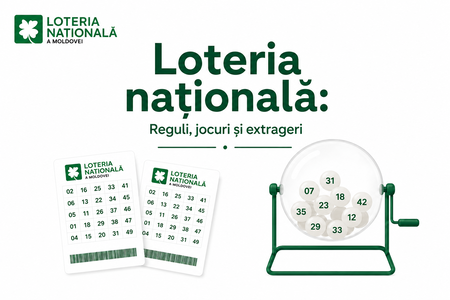
Behind the apparent simplicity of the lottery lies a clear set of rules. Knowing them does not increase your chances of winning, which remain fixed, but it helps you understand exactly what you are playing, how prizes are set and how a draw takes place.
This article goes through the three essential elements of a national lottery, such as the National Lottery of Moldova: the rules by which it works, the games you may come across and the way draws are carried out.
Any regulated lottery starts from a public set of rules, which the player can access before taking part. The document establishes the ticket price, the game format, the prize categories and the conditions for validating winnings.
The fundamental principle is the independence of the draws. The result of one round has no connection to the previous ones, and no past pattern can predict future numbers. From this follows an important consequence: no number-selection strategy changes the actual probability.
Prize validation, in turn, follows strict rules. A winning ticket must be presented within the set period, and prizes above a certain threshold may require a specific claim procedure. These details are always stated in the game rules.
The offer of a national lottery is not limited to a single format. The most common types are:
Number lotto, where you choose a combination and wait for the scheduled draw
Instant games, with an immediate result and no draw
Keno-type draws, with frequent rounds and a wider range of numbers
Fixed-prize games, where the value of the win is defined in advance
The difference between them lies not only in the rules but also in the pace. A number lotto means waiting for a draw, while an instant game gives the result on the spot. The choice depends on what you are after: big prizes and patience, or a quick result.
One feature common to all formats is the transparency of the odds. An authorized operator states, in the rules, the chances of each prize category, which allows a fair assessment before playing.
The draw is the moment when the winning numbers are determined. The process is designed to be completely random and verifiable, and for this two main methods are used.
The first is mechanical, with numbered balls mixed in a special device. The second uses a certified random number generator, checked by the regulatory authority. Both produce a result that is impossible to anticipate.
After the draw, the winning numbers are officially published. Comparing your ticket with these numbers establishes whether, and in which category, you have won. It is essential to check only against the official results published by the operator.
A clear framework of rules is not a bureaucratic formality but a form of protection. The public rules remove ambiguity and give the player a point of reference in any situation.
Thanks to these rules, draws cannot be manipulated, prizes are guaranteed and the payment procedure is predictable. Without such a framework, none of these guarantees would exist. This is the main reason why playing through authorized operators is the only safe option.
The rules of the game also include a dimension that concerns the player, not just the operator. A lottery is, by design, favorable to the operator in the long run, and this must be accepted from the start.
A few guidelines help toward balanced play: set a budget you can afford to lose, do not increase the amount you play in order to recover a loss, and view taking part as an entertainment expense, not an investment. Authorized operators also provide self-limitation tools, useful for keeping control.
The rules, games and draws together form the framework that makes a national lottery predictable in how it works, even if unpredictable in its result. The public rules set the conditions, the formats cover different preferences, and the random draws guarantee a fair outcome.
Understanding these elements does not change the odds, but it does provide informed participation. Play only through authorized operators, stick to the budget you have set, and remember that the lottery is entertainment intended for those over 18, not a way of making money.
1. Where do I find the rules of a lottery game?
In the game's public rules, made available by the authorized operator before you take part. They state the price, the prizes and the validation conditions.
2. What types of games does a national lottery offer?
Most often: number lotto, instant games, Keno-type draws and fixed-prize games. Each has its own rules and pace.
3. How is it guaranteed that a draw is fair?
Through the use of mechanical devices or certified number generators, supervised by a regulatory authority, and through the official publication of the results.
4. Can I predict the numbers based on previous draws?
No. Each draw is independent, and past results do not influence future rounds.
5. What do I do if I have a winning ticket?
You present it for validation within the period set by the rules. Large prizes may require a specific procedure, also stated in the rules.
What happens to prizes that go unclaimed?
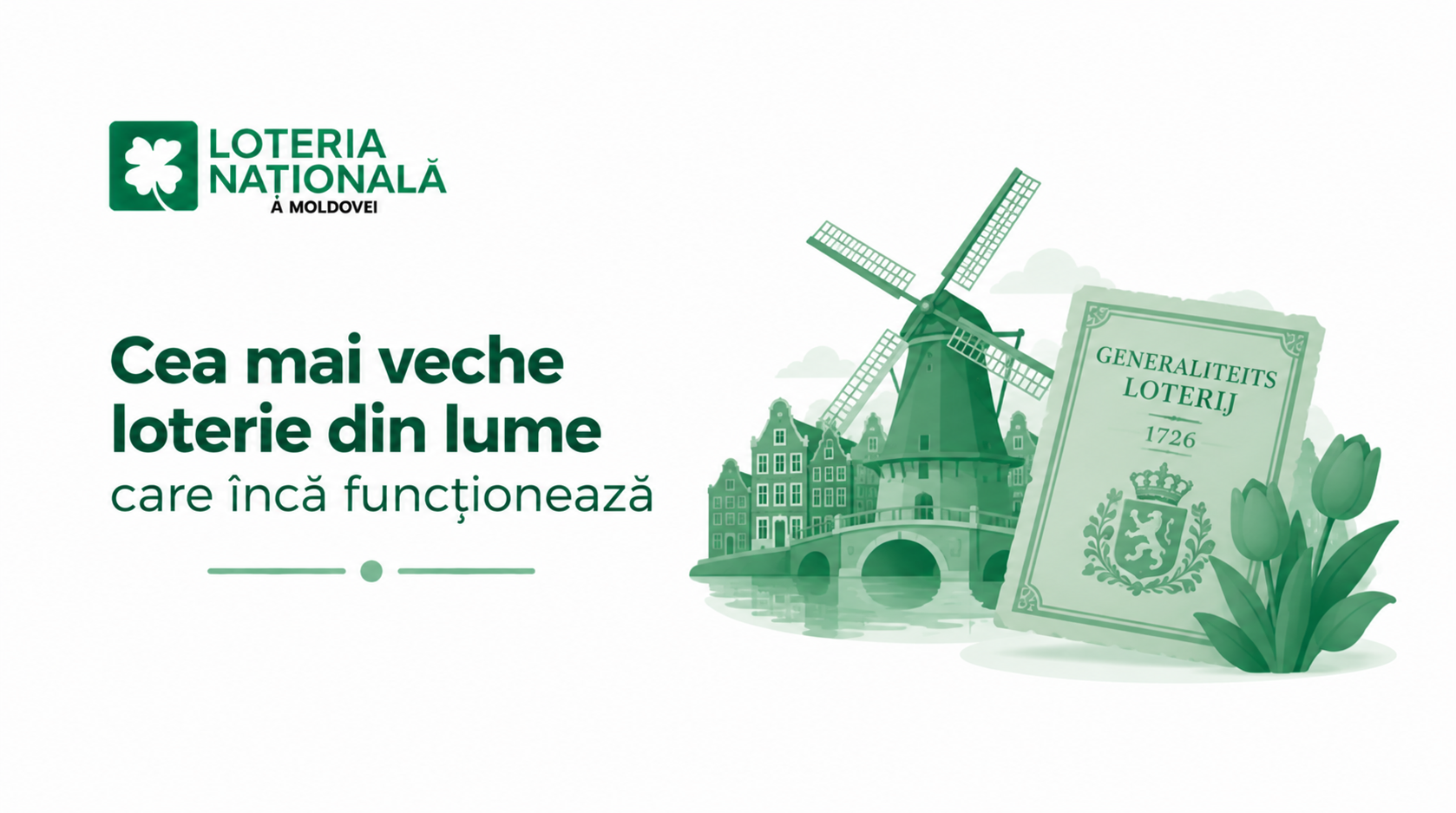
The oldest lottery in the world that still operates
How did lotteries come about?
.png)
The biggest wins in lottery history

Dacă ai putea schimba un singur lucru în serviciile oferite de Loteria Națională a Moldovei (LNM), ce ai schimba? Spune-ne. Vrem să știm.
.png)
Message of the month: Don't chase luck! Enjoy the game