The oldest lottery in the world that still operates

Sep 16, 2026

Sep 16, 2026
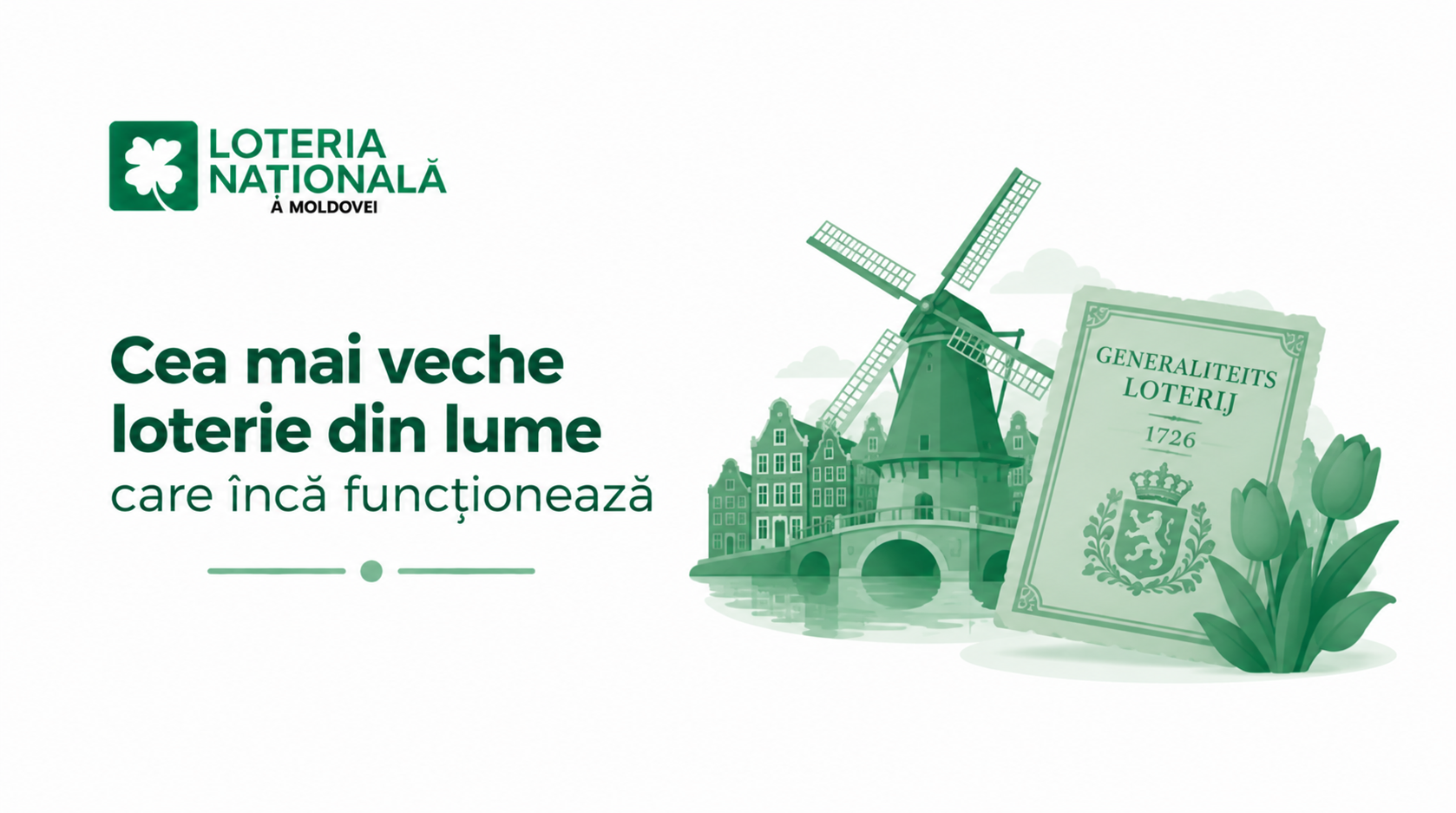
While many games appear and disappear within a few years, there is a lottery that has been selling tickets for almost three centuries, without interruption. It's called the Staatsloterij, it's the state lottery of the Netherlands, and it appeared at a time when there were no cars, no telephones, not even electricity. Its story shows how old and how durable the idea of trying your luck can be.
The Dutch Staatsloterij was founded in 1726 and is the oldest lottery operating without interruption to this day. At the time it appeared, it was called the Generaliteitsloterij, and the first draw took place in the Hall of Knights in The Hague.
To understand how old it is, a comparison helps: the first modern legal lottery in the United States appeared only in 1964. In other words, the Dutch had been playing the lottery for over two centuries before the Americans had a regulated one. In 2026, the Staatsloterij celebrates its 300 years of existence.
The reason for its appearance is surprisingly current. In the 18th century, in the Netherlands there were numerous private lotteries, many associated with fraud, corruption and lack of control. The state decided to put things in order.
The solution was centralization. All these scattered lotteries were united into a single one, organized and supervised by the state. The purpose was twofold:
To restore public trust in a fair game
To bring revenue to the country's treasury
In practice, the state lottery was born as a response to the chaos in the market, exactly the type of problem that regulation solves today as well.
At first, the draws didn't resemble at all the quick ones of today. They were genuine public events, watched by crowds.
The draws sometimes took place over the course of several months and drew large audiences in the major cities. The lottery quickly became part of the everyday life of the Dutch, a cultural landmark, not just a game of money. This connection with society helped it endure for centuries on end.
The secret of its longevity lies in its ability to change along with the times. Over the course of three hundred years, the lottery evolved together with the Dutch state.
A few key moments show this transformation:
Thus, a game that appeared with paper tickets and manual draws has come today to be played including through phone apps, while keeping its identity at the same time.
Few things survive three centuries. In the case of this lottery, several factors mattered. It is considered fair and safe to play, winnings are exempt from tax, and part of the money from tickets goes toward social programs and public works.
Added to this is a strong tradition. The New Year's Eve draw, the Oudejaarstrekking, has become one of the most popular playing moments of the year in the Netherlands, a custom passed down from generation to generation. The lottery was not only tolerated, but integrated into the country's cultural calendar.
The longevity of a three-hundred-year-old lottery doesn't come down to luck, but to a few solid principles. A regulated framework, fair draws, transparency and part of the revenue returned to the community: exactly the ingredients that make the difference between a trustworthy game and a dubious one.
It is, at heart, a lesson that applies anywhere in the world. The lotteries that endure are the ones where the player has the certainty that everything happens fairly. The age of the Staatsloterij isn't just a historical curiosity, but also proof that a well-organized game, under state control, can become a lasting institution.
Don't forget that the lottery and betting are permitted from age 18, and higher-risk games, such as slots, only from 21. Even a lottery three centuries old remains a form of entertainment, not a path to getting rich. Play responsibly, with a limit set in advance.
Want to learn more?
You'll find guides, explanations and articles that help you understand how the games work before you decide.