Why there are no lucky numbers in lottery

Sep 22, 2026

Sep 22, 2026
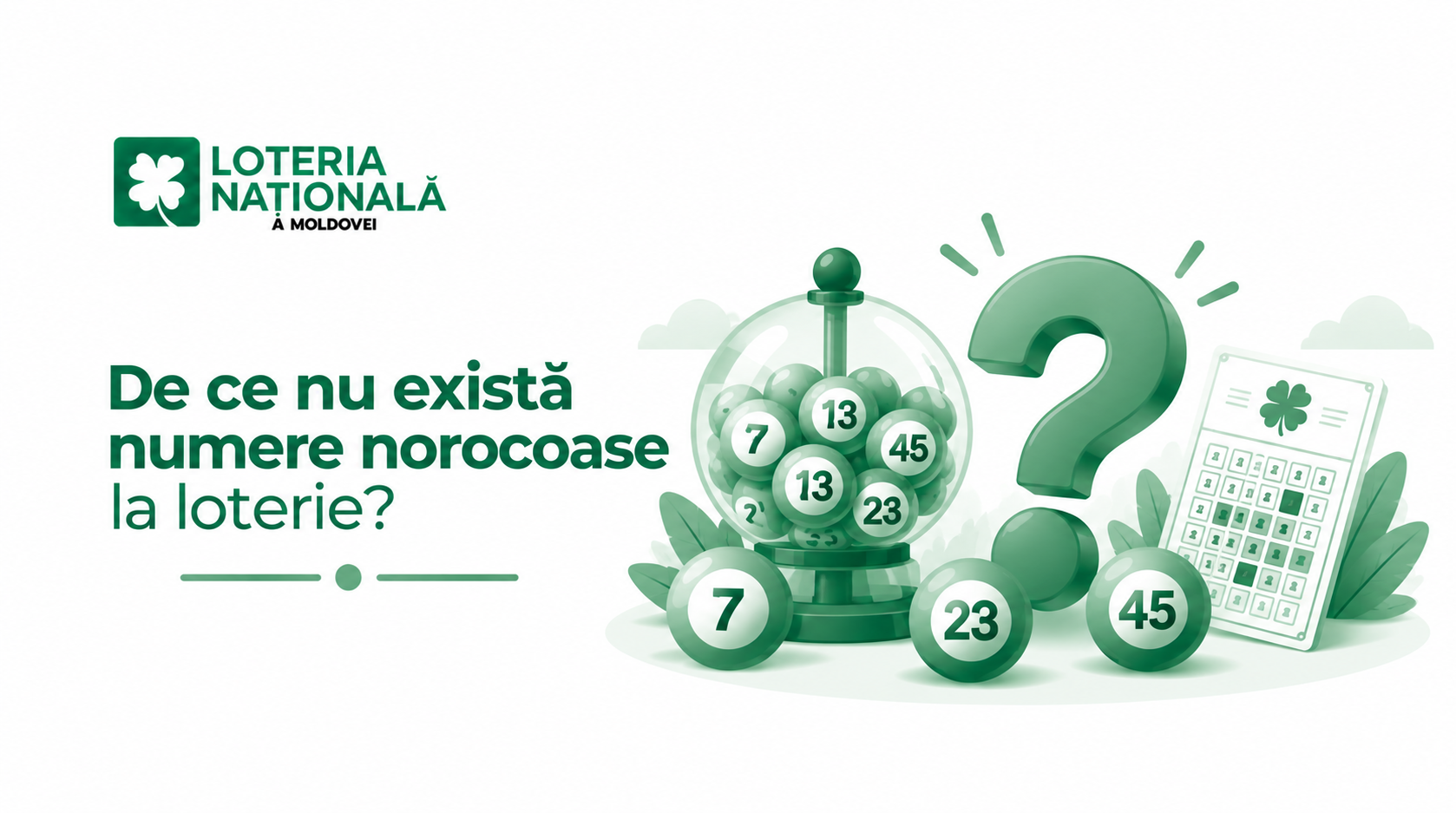
Many players stick with the same set of numbers from one draw to the next: a birthday, an anniversary, a number that came up once, or a combination they heard from someone else. The habit is so common it feels natural.
The math behind a draw does not support it, though. There are no numbers that come up more often, and no numbers that are "due" after a long absence. This article explains why, without complicated formulas.
A drawing machine — mechanical or certified electronic — has no memory. The balls do not remember what happened last week, and a random number generator does not use the previous result as a starting point for the next one.
This is the technical meaning of the word independent: each draw is a separate event, and previous results contain no information about the one that follows.
It follows that a draw history, however long, has no predictive value. It may be interesting to look at, but it tells you nothing about the next draw.
The idea comes in two versions that contradict each other. The first says a number that has come up a lot recently is "hot" and will keep coming up. The second says a number that has been missing for a long time is "cold" and is about to appear.
The fact that two theories built on the same data reach opposite conclusions is the first sign that neither one describes reality. The second is known in statistics as the gambler's fallacy — the mistaken idea that chance corrects itself in the short term.
Over a long enough series of draws, each number appears roughly the same number of times. This is a consequence of the large number of repetitions, not a force stepping in to balance the results. The drawing mechanism has no way of knowing that a particular number has been absent.
In a 6 from 49 lottery there are 13,983,816 possible combinations. Each one has exactly the same probability of coming up — one chance in roughly 14 million.
This includes combinations that seem unlikely. The sequence 1-2-3-4-5-6 has the same chance as any other combination. It only feels less probable because we recognise a pattern in it, and patterns seem out of place in a random result.
The full odds for a 6 from 49 format are as follows:
6 numbers matched: 1 in 13,983,816
5 numbers matched: 1 in 54,201
4 numbers matched: 1 in 1,032
3 numbers matched: 1 in 57
2 numbers matched: 1 in 7.6
These values are fixed. They do not change based on the numbers you choose, the day you play, how often you play, or how long you have been playing the same combination.
Your choice of numbers does affect one thing, though — just not the one players usually think about.
Birthdays only use numbers from 1 to 31, even though the format goes up to 49. This does not reduce your chance of winning, since every combination has the same probability, but it can reduce how much you receive.
The reason is simple: a lot of people play birthdays, so combinations made up of low numbers are played by more people. If such a combination comes up, the prize is split among everyone who had it.
Choosing your numbers does not change your chance of winning. It can only change how much you get if you do win.
There is no system to study, no history to analyse, no combination to uncover — because there is nothing to find.
What remains within the player's control is something else:
Budget: The amount you decided in advance you can afford to lose without consequences.
Frequency: How often you play — a choice that is yours to make, not one driven by past results.
Expectations: Knowing you are taking part for entertainment, not income.
Format: Which game you choose, knowing that smaller prizes have significantly better odds.
Lucky numbers do not exist. Neither do hot numbers, cold numbers, or combinations that are overdue after a long absence. Every draw is independent, and all combinations have exactly the same probability.
You can keep playing your birthday if it makes you happy, as long as you know it does not improve your odds and that, in the event of a win, the prize is more likely to be shared. The National Lottery of Moldova operates with fixed odds and independent draws, within the state monopoly, and participation is only allowed for people aged 18 and over. Play with a budget set in advance and treat the lottery as entertainment.
1. What are the lucky numbers in lotto 6 from 49?
There are none. All 13,983,816 possible combinations have exactly the same probability of coming up, and no number appears more often than any other in the long run.
2. Do numbers that have come up a lot recently have better odds?
No. The drawing machine has no memory, and each draw is independent of the ones before it. Past results contain no information about the next draw.
3. If a number hasn't come up in a long time, is it about to appear?
No. This is the gambler's fallacy — the mistaken idea that chance corrects itself. The drawing mechanism has no way of knowing that a number has been absent.
4. Can the combination 1-2-3-4-5-6 come up?
Yes, with exactly the same probability as any other combination. It only feels unlikely because we recognise a pattern in it.
5. Is it better to play birthdays or randomly chosen numbers?
The chance of winning is identical. The difference is that birthdays only use numbers up to 31 and are played by a lot of people, so any prize is more likely to be shared.
6. Is there any strategy that improves your lottery odds?
No. The probabilities are mathematically fixed and depend entirely on the game format. The only thing you can control is the budget you play with.
Want to learn more?
You'll find guides, explanations and articles that help you understand how the games work before you decide.