Genoa, the city where the modern lottery was born

Oct 09, 2026

Oct 09, 2026
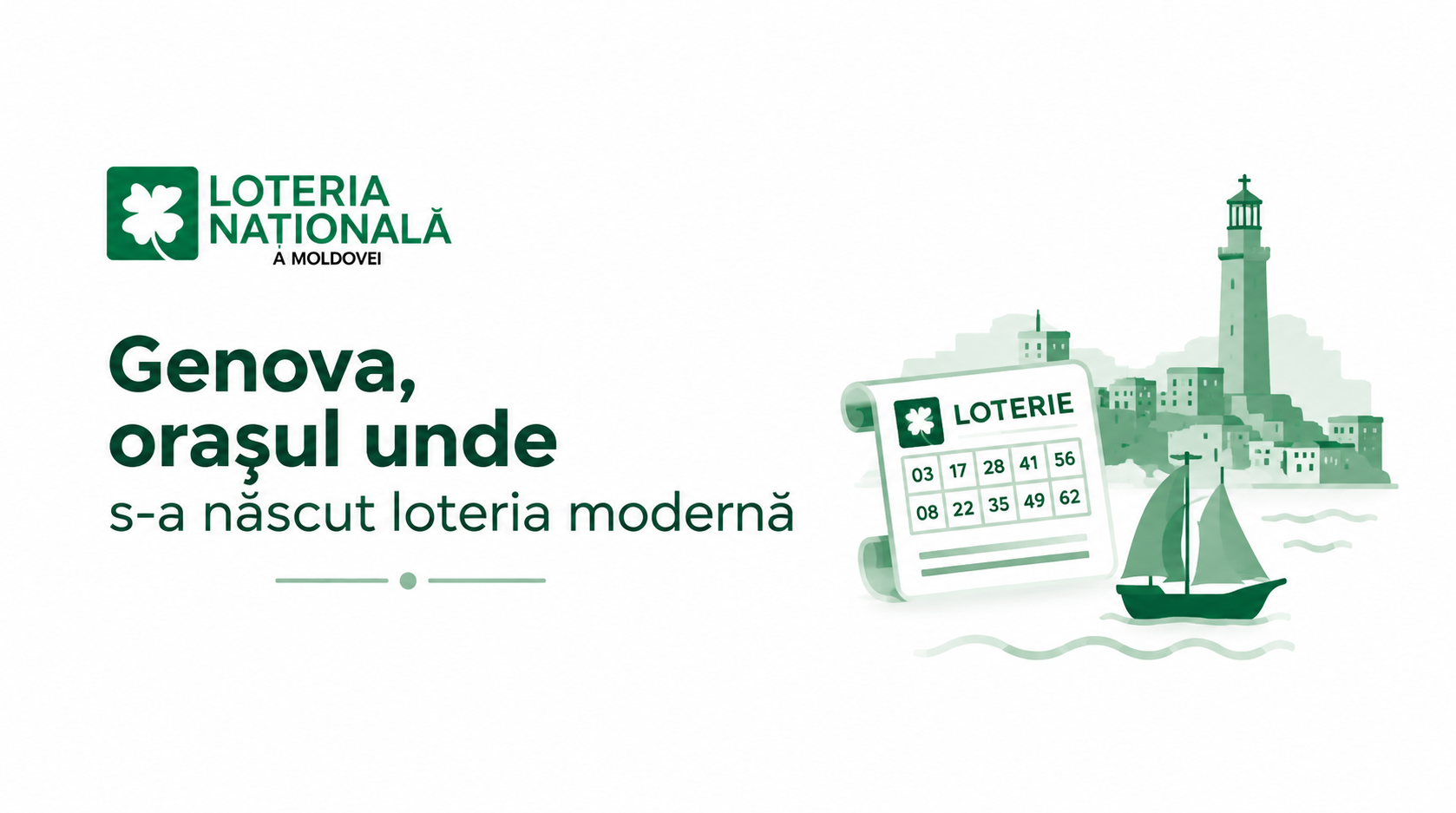
Few people filling out a numbered ticket today know they are performing a gesture with roots going back over four hundred years. Modern lotteries, with numbered balls and regular draws, did not appear in Rome or Paris — they emerged in an Italian port city: Genoa. And, like many inventions that changed the world, this one started with something that had nothing to do with gambling.
To understand why the lottery appeared in Genoa of all places, we need to look at what kind of city it was. In the sixteenth and seventeenth centuries, Genoa was one of the great commercial powers of the Mediterranean — a centre of bankers and merchants who even financed the Spanish crown. But wealth came with enormous expenses: wars, debts, public works. The city's treasury was often stretched to its limits.
In this context, any method of raising money from the population without imposing new direct taxes was welcome. The lottery would eventually become exactly that. But before it was a financial instrument, it was simply a game that grew out of a local habit.
The Republic of Genoa periodically renewed its leadership. Every six months, five seats on the Grand Council became vacant and were filled by new members. Their selection sparked heated debate and, inevitably, wagers across the city: who gets in, who stays out.
The Genoese, practical people with a commercial instinct, turned this speculation into a game with clear rules. The names of the candidates were written on slips, placed in an urn, and drawn on decision day. Whoever correctly guessed the names drawn took the money.
What had started as political gossip had become a business — and a profitable enough one that the authorities at one point officially banned it, precisely because the stakes kept growing.
The ban did not last long. The game was already too popular to disappear, and the city had too much to gain from it.
The moment that changed everything was a seemingly simple idea: instead of names, numbers were used. A board with 90 numbers, from which five were drawn. Simple, easy to reproduce anywhere, no longer dependent on the election calendar or who was running for the Council.
This is already recognisable as the lotto we know today. The structure invented then has remained almost unchanged to this day. The draws became regular — weekly — and the game took on a life of its own, completely separate from the politics it was born from. Here is how little the essence has actually changed:
The shift from names to numbers seems like a small detail, but it was in fact the leap that turned a local custom into a model exportable to the whole world.
What is worth remembering is that the Genoese game was not just about personal gain. In some versions, the numbers were assigned to poor young women in the city, and whoever's number came out received a sum of money to use as a dowry. The game, then, had a clear social dimension beyond the element of chance.
This idea — that part of the money should go back to the community — travelled with the game. In Venice, for example, part of the revenue paid for the city's street lighting. In Naples, as in Genoa, the money helped girls without means. Wherever it arrived, the lottery brought with it this logic of shared benefit.
Once transformed into a numbers game, the Genoese model spread with remarkable speed. It reached the Papal States, Prussia, the Netherlands, and Austria, where it was simply called the "lotto from Genoa." The name carried its origins everywhere, like a label of provenance.
Its popularity also attracted the attention of mathematicians. A game with fixed rules and random outcomes was the perfect ground for the first serious calculations in probability. Even the great mathematician Leonhard Euler turned his attention, in the eighteenth century, to the Genoese lottery, trying to understand the real odds behind it.
In practice, a neighbourhood game from Genoa contributed indirectly to the development of probability theory.
What does this story tell us about the lottery in general? That it is by no means a recent invention, but a centuries-old tradition, always tied to the life of cities and often to community support. The five from ninety you mark on your ticket are exactly the same five from ninety that were wagered on in Genoa four hundred years ago.
The next time you watch a draw, it is worth pausing for a moment to think about that urn with its slips of paper, the Genoese councillors, and the commercial city that unknowingly set in motion one of the longest-lasting games in history. Few things invented in the seventeenth century still work today in almost unchanged form.
Remember that lotto and betting are allowed from age 18, while higher-risk games such as slots are only for those aged 21 and over. Whatever the game, it remains a form of entertainment, not a way to make money. Play it sensibly, with a limit set in advance, and stop at it.
Want to learn more?
You'll find guides, explanations and articles that help you understand how the games work before you decide.